Back

Insights & Applications

Signal Briefs

Resilience is the wrong goal

Design keeps building for resilience: protect the skill, protect the role, protect the way of working. Antifragility asks for something more demanding. India's craft clusters didn't survive disruption by staying protected from it. They absorbed shock after shock, in demand, in materials, in external influence, and came out the other side of each one producing forms of value that hadn't existed before. Resilience returns a system to where it started. This doesn't. Structural implication: a team measured on how fast it returns to normal after disruption is being rewarded for the wrong thing.

Ambiguity is the material, not the noise

Every AI system is built to collapse ambiguity into an answer. In a design classroom, ambiguity is the exact material the thinking needs. Remove it, and the thinking has nothing left to work with. Structural implication: the AI tools praised for saving time in a design process may be the same tools quietly removing the process.

Curiosity doesn't disappear. Systems teach people when not to use it.

Students stop asking questions. Employees stop offering ideas. Both are responding rationally to environments that reward certainty, efficiency and compliance over exploration. The problem isn’t motivation – it’s continuity between the systems people learn in and the systems they work in..

Structural implication: Organizations cannot build ownership if they inherit behaviors their own structures continue to reward.  Lasting change requires redesigning the conditions that shape behavior, not just the methods used within them.

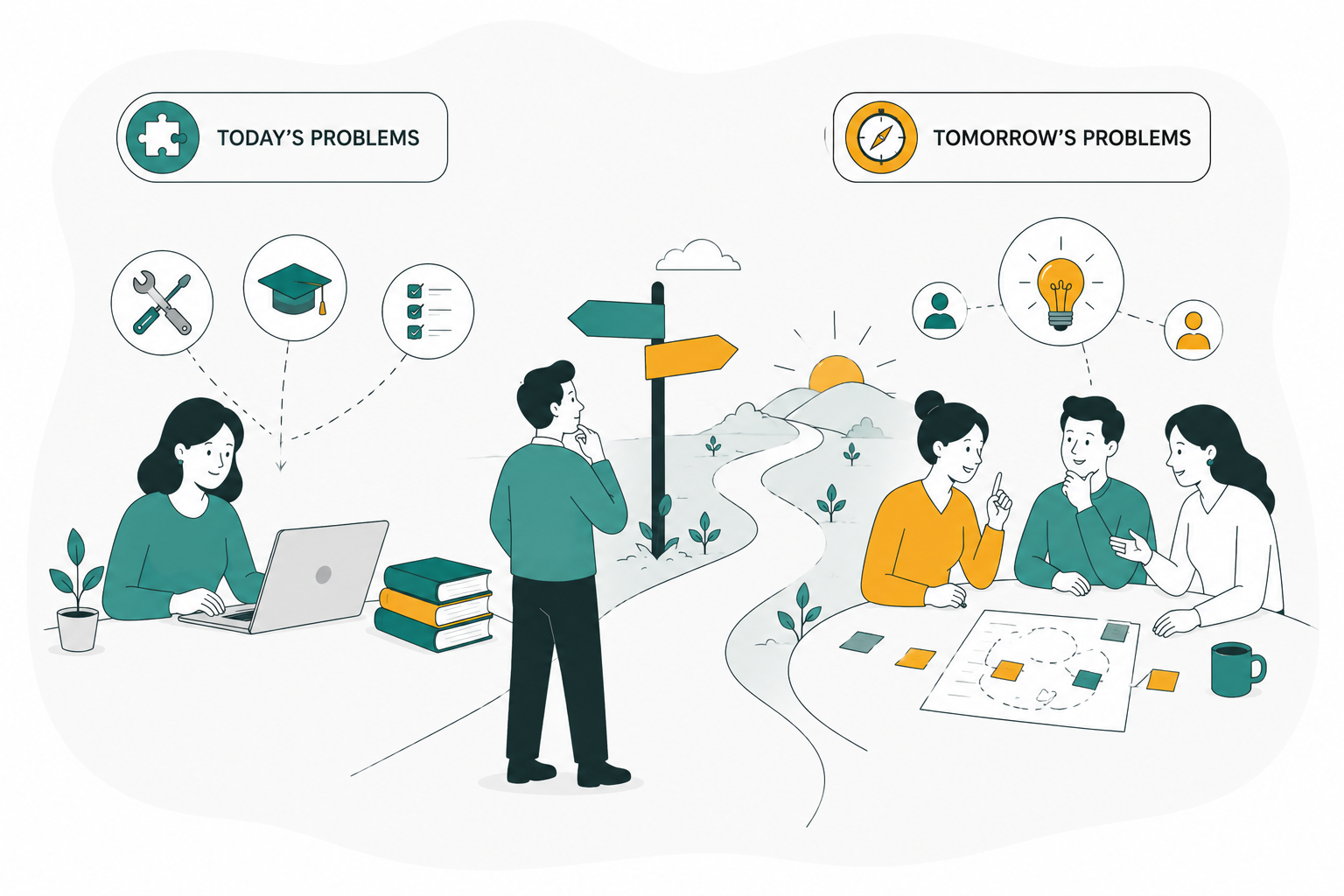
Skills solve today's problems. Capability prepares people for tomorrow's.

Organizations often invest in new tools and training while the real challenge is helping people navigate problems that don’t yet have known answers. Transformation is less about transferring knowledge than building adaptive capacity. 

Structural implication: organizations don’t become future-ready by accumulating answers, but by increasing their capacity to ask better questions. 

Intelligence Papers

Building Human Advantage in the Age of AI

A practical framework for designing purposeful Human–AI partnerships.

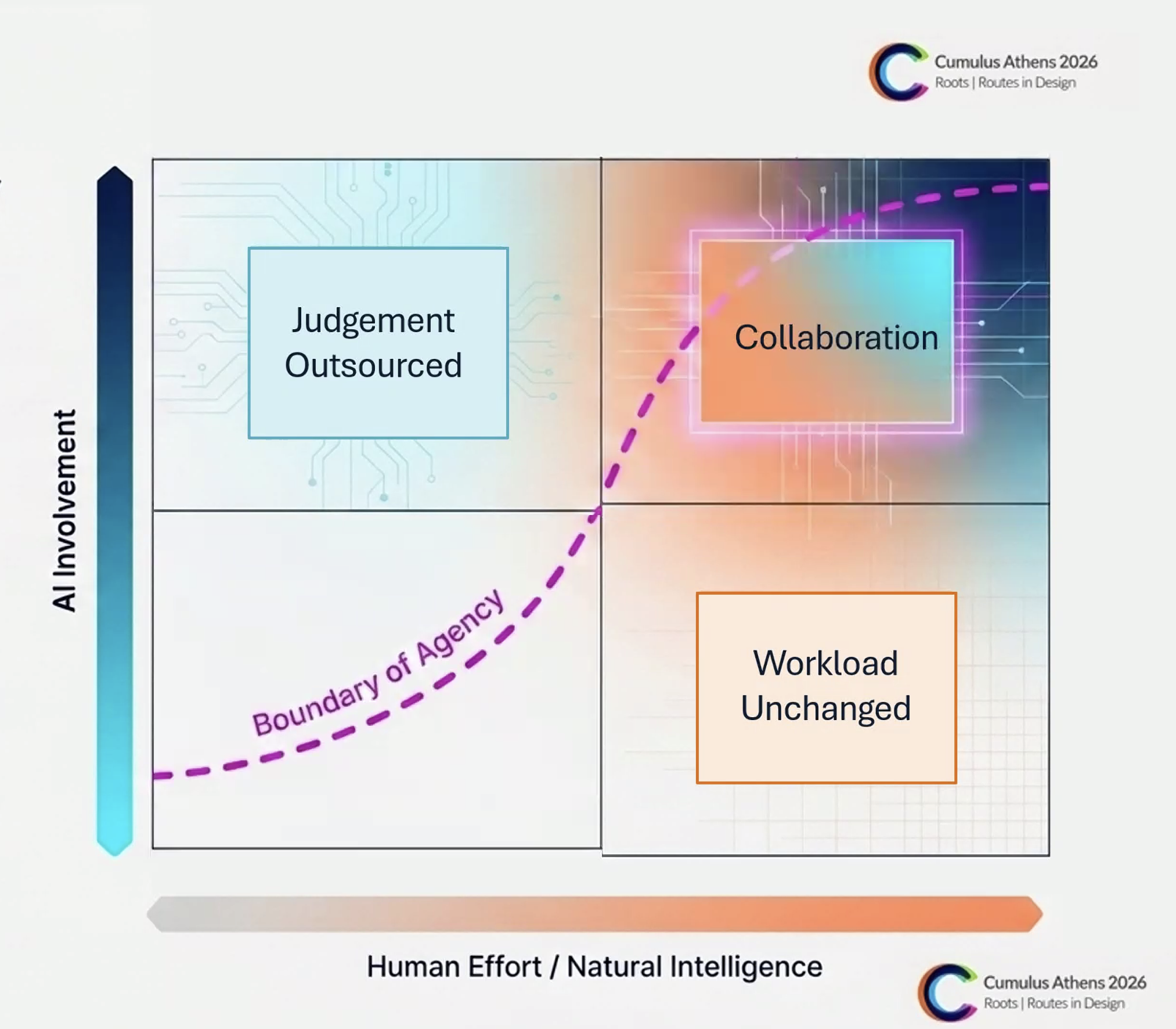
AI creates value when it amplifies human judgement rather than replaces it. This paper introduces a structured framework for integrating AI across work and learning while preserving creativity, critical thinking and decision-making. It is currently under publication. 

Themes: Artificial Intelligence • Future of Work • Leadership • Learning Systems

Making Complex Systems Understandable

How game-based design helps people navigate uncertainty, complexity and change.

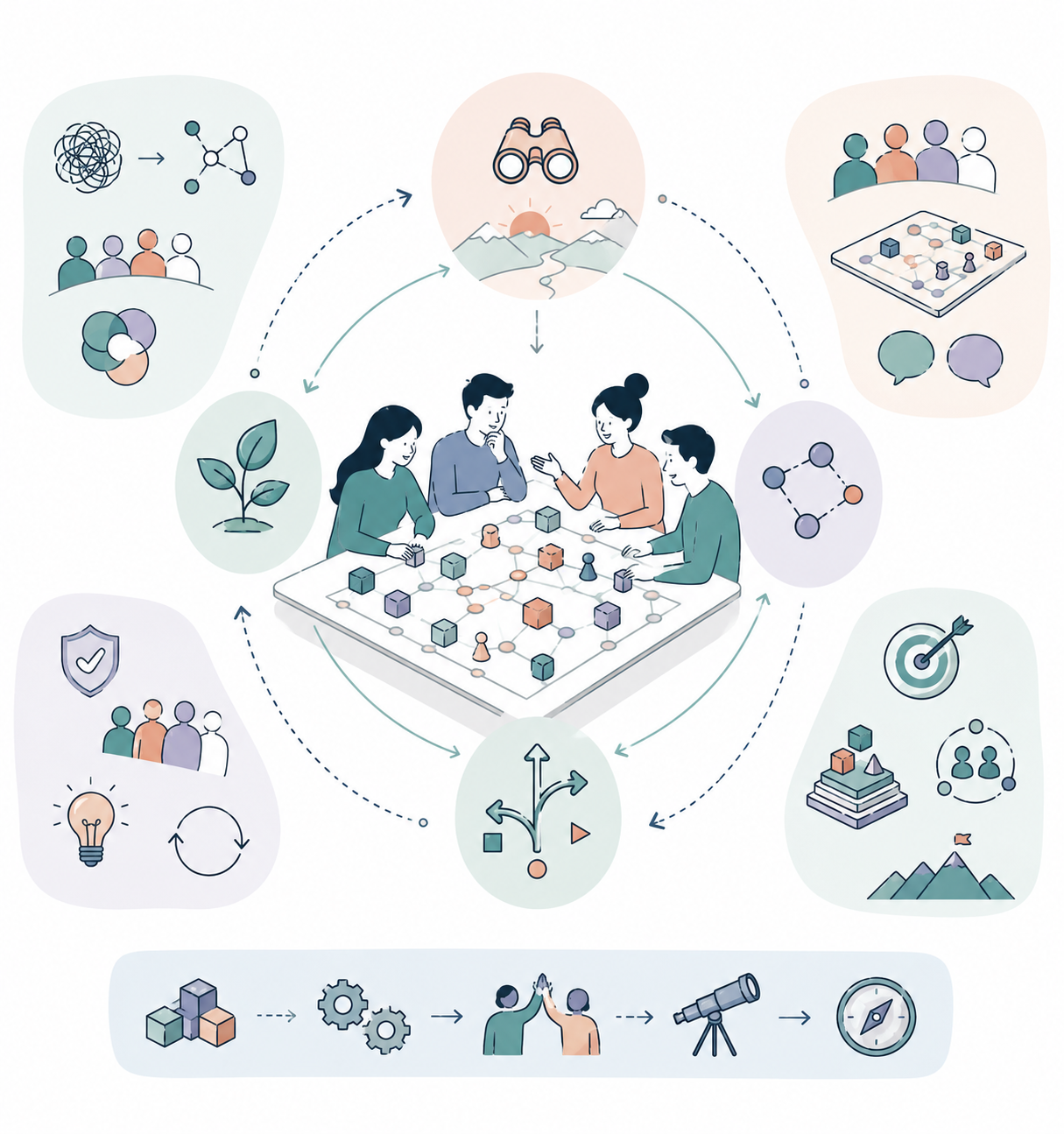
Complex systems are difficult to understand because they cannot simply be explained—they need to be experienced. This paper introduces a framework for using play and simulation to build systems thinking, collaboration and strategic foresight.

Themes: Systems Thinking • Learning Design • Innovation • Strategic Foresight

Seeing the Invisible in Systems

A framework for diagnosing hidden barriers, exclusion and organisational friction.

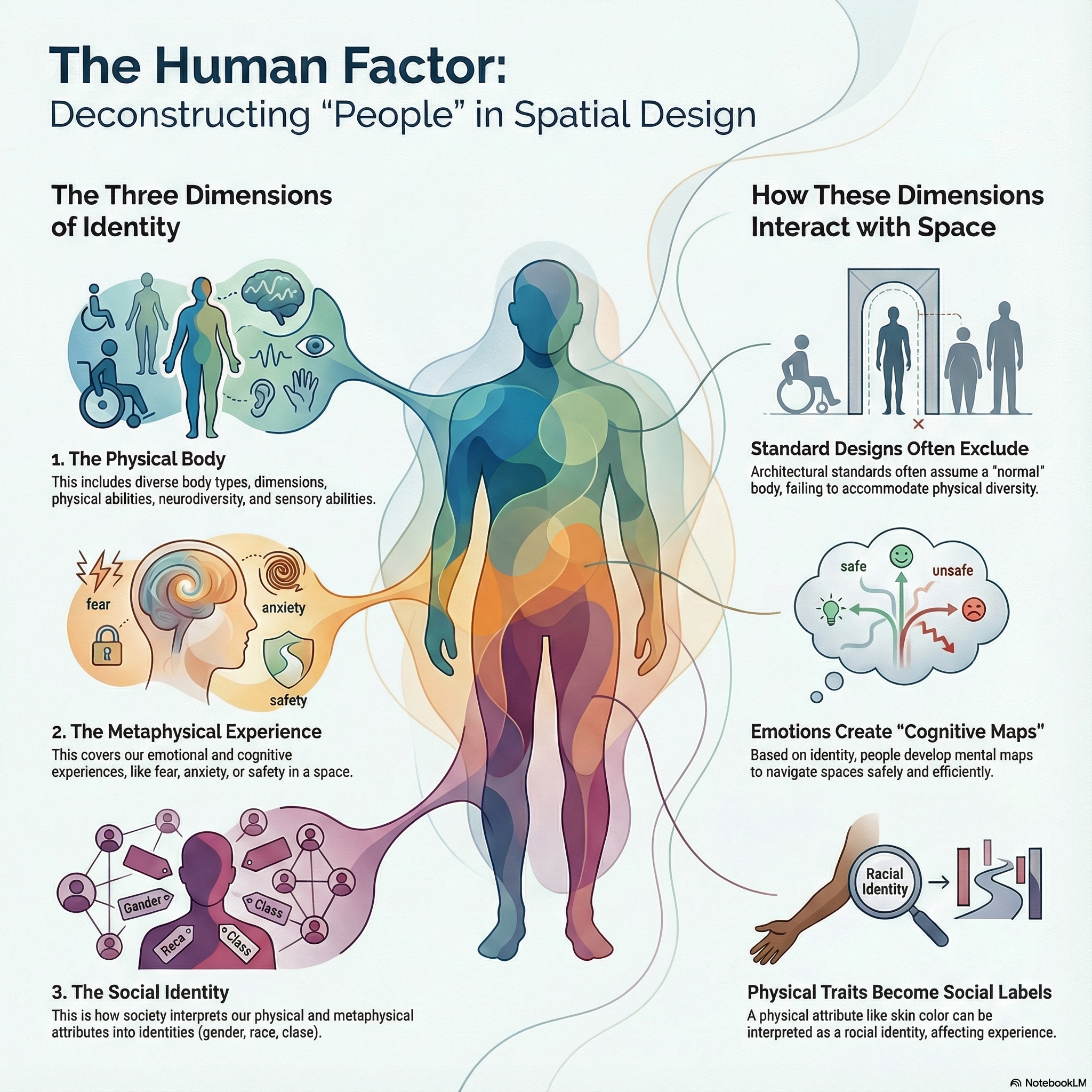
Many organisational challenges are symptoms of deeper structural issues that remain unseen. This paper introduces a systems framework for identifying invisible barriers that lead to exclusion and that shape behaviour, participation and outcomes.

Themes: Systems Design • Inclusion • Spatial Diagnosis • Strategy

Designing Institutions That Learn With Care

How learning systems create adaptability, ownership and long-term capability.

Developed through research in higher education, this paper argues that the principles behind high-performing learning environments extend far beyond the classroom. It explores how care, trust and participation can be intentionally designed to build stronger teams, more adaptive organisations and better leaders. 

Themes: Learning Design • Leadership • Culture • Human Capability

Field notes

You can't design the future by analysing the present alone.

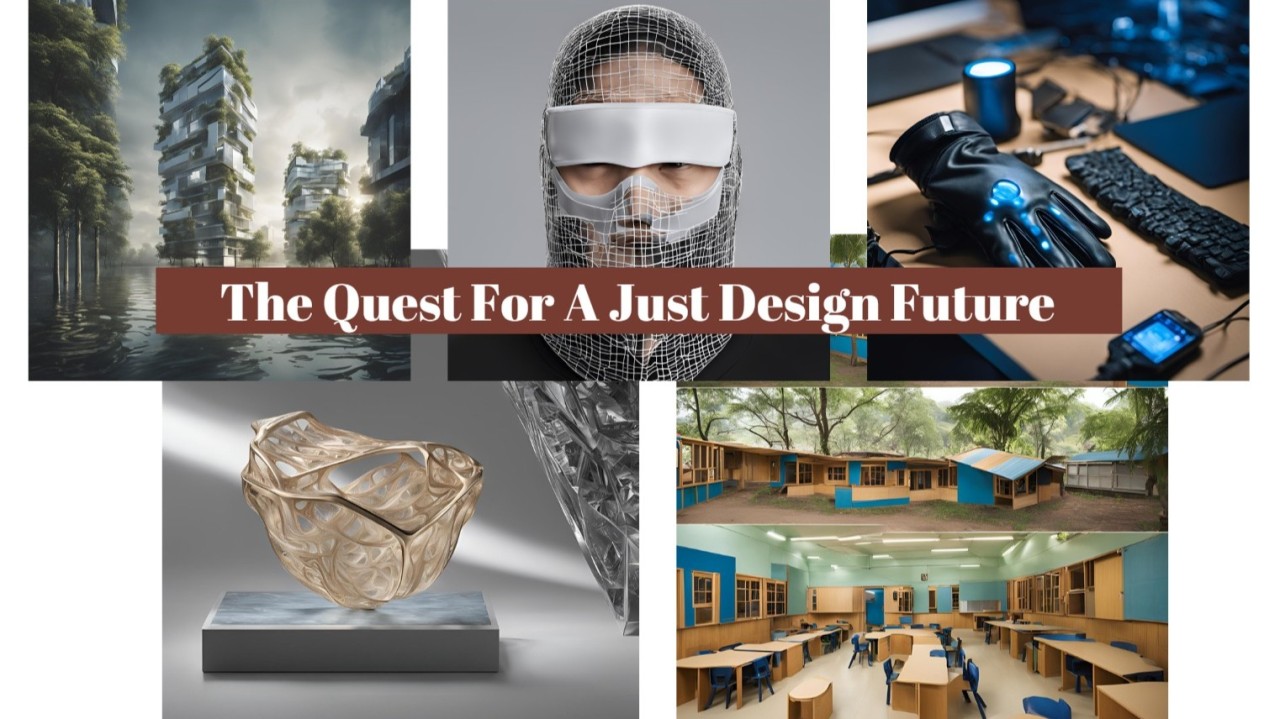
Innovation accelerates when people can experience complexity instead of discussing it. In this seven week speculative futures exercise, students weren’t asked to imagine future products. They built games, collaborative narratives and interactive installations that generated future scenarios by making people experience climate change, disruptive technology, inequality and power. The most compelling design principles emerged through interaction and collaboration- not prediction.

Structural implication: organisations learn faster when they design systems that generate possibilities rather than asking people to predict the future.

You can't lecture systems thinking into people. They have to experience it.

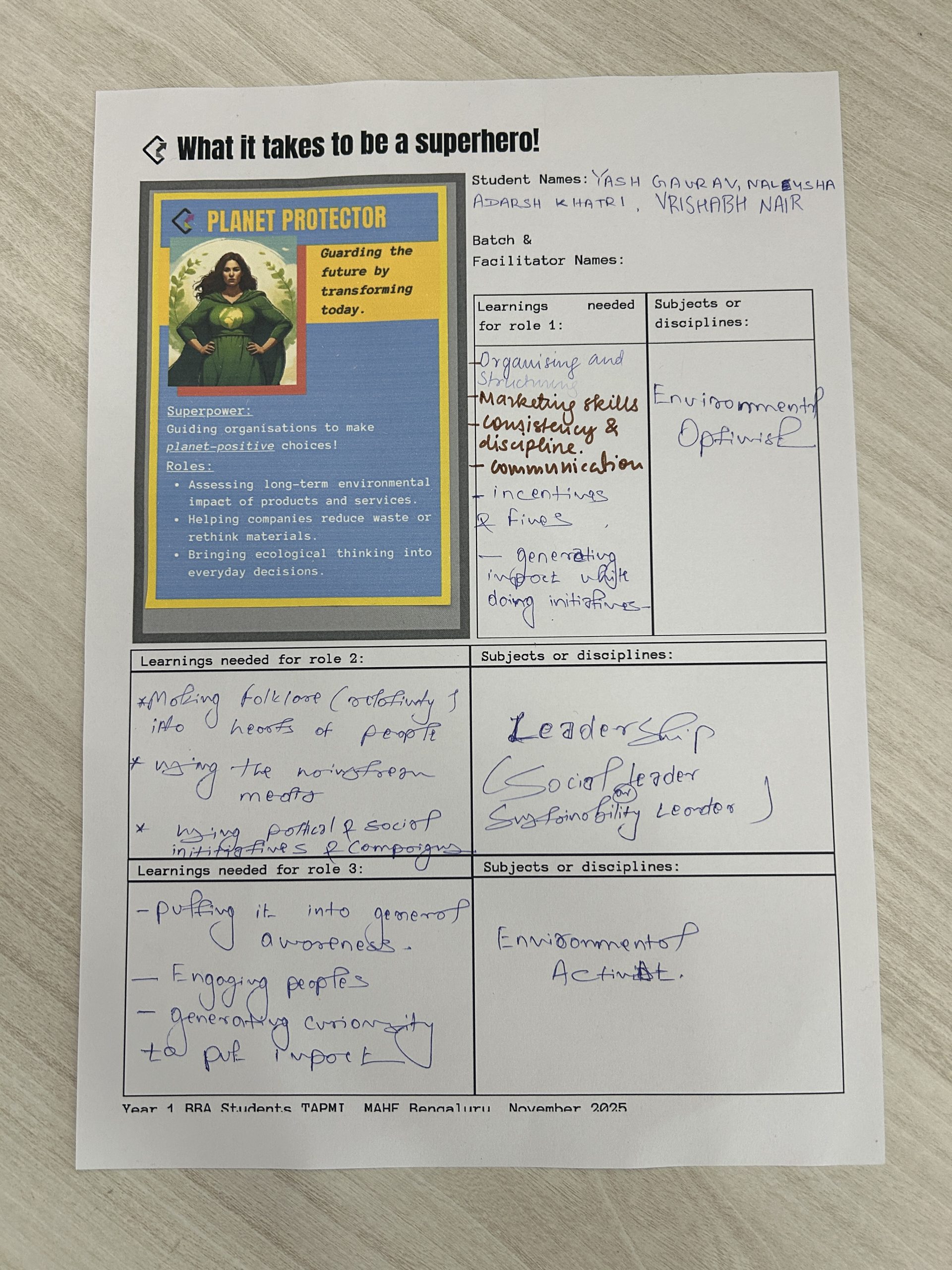
Over 200 students were asked to imagine themselves as future superheroes. Within hours, Post-it notes became patterns, patterns became personas, and personas became systems. By the end, People, Product, Purpose, Planet and Profit were no longer concepts—they were competing forces students had to negotiate in real time.

Structural implication: deep learning begins when people stop consuming frameworks and start making decisions inside them.

Tags: Field Notes | Learning Design

Resilience is the wrong goal

Design keeps building for resilience: protect the skill, protect the role, protect the way of working. Antifragility asks for something more demanding. India's craft clusters didn't survive disruption by staying protected from it. They absorbed shock after shock, in demand, in materials, in external influence, and came out the other side of each one producing forms of value that hadn't existed before. Resilience returns a system to where it started. This doesn't.

Structural implication: a team measured on how fast it returns to normal after disruption is being rewarded for the wrong thing.

Read →

Ambiguity is the material, not the noise

Every AI system is built to collapse ambiguity into an answer. In a design classroom, ambiguity is the exact material the thinking needs. Remove it, and the thinking has nothing left to work with.

Structural implication: the AI tools praised for saving time in a design process may be the same tools quietly removing the process.

Read →

The misdiagnosis problem

70% of transformation efforts fail, and most of the money is still going to the same place: technology. The real failure sits one layer down, in the 90% of budget that never reaches the people expected to change how they work.

Structural implication: fixing this means moving the budget toward the people expected to change how they work.

Read →

What methods can't hold anymore

Ethnography, co-design, systems mapping all assume the ground holds still long enough to apply them. It increasingly doesn't. What actually gets a designer through the moment a method breaks is a smaller, less nameable set of capacities: sense-making, ethical judgement, relational awareness. No framework teaches these directly, because they don't look like technique. They look like judgement, which is harder to put in a slide.

Structural implication: training people harder on the method doesn't help when the method itself is what's failing.

Read →

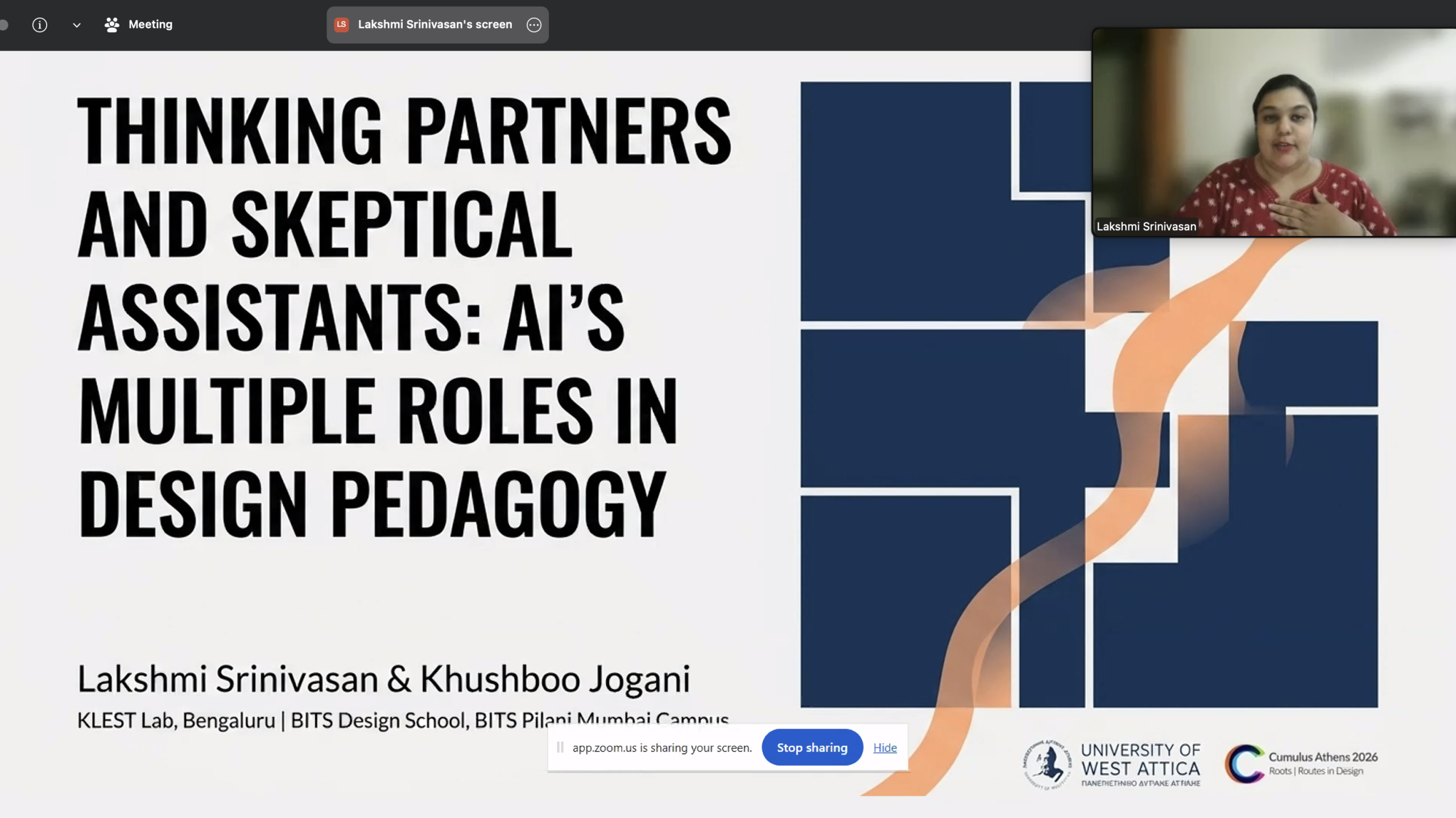
The four jobs AI is already doing in your classroom

Most institutions still talk about AI as one thing to permit or restrict. It moves through four distinct roles in a classroom: a thinking partner, a critic, a teaching assistant, a secretary. Each role changes what a student actually learns from using it. A policy written for AI in general misses the decision that matters, which role fits which task.

Structural implication: naming the role in use is the difference between using it deliberately and not noticing it's being used at all.

Read →

The most useful thing AI did was refuse to answer

135 design students, a simulated failing company, a board meeting, four AI agents instructed never to give the answer. One student broke the frame and ran the same crisis through an ordinary chatbot instead. It produced a clean recommendation immediately. It was the least interesting submission in the room. Everyone who stayed inside the constraint had to argue, discard, and reframe their way to a decision. One group built their entire answer around reversibility, a principle nobody had assigned them.

Structural implication: an AI tool that resolves ambiguity fast is removing the exact condition under which design thinking happens.

What a village teaches about slow tourism

A fixed idea of what tourists want fails the same way twice. Notes from a year spent living inside a rural tourism project before designing a structure.

Structural implication: design assumptions made before living in the context get discarded once the context talks back.

Tags: Field notes | Enterprise 

Read →

Applications

Every organizations carries structural tension that lies between ambition and capacity, innovation and coherence, growth and governance.

These studies trace how those tensions were addressed in practice

From job-work to worker-owned studio

A jewellery artisan cluster in Gujarat ran on piece-rate work with no protection. KLEST designed a cooperative ownership model instead. It still runs itself, years later, without KLEST in the room.

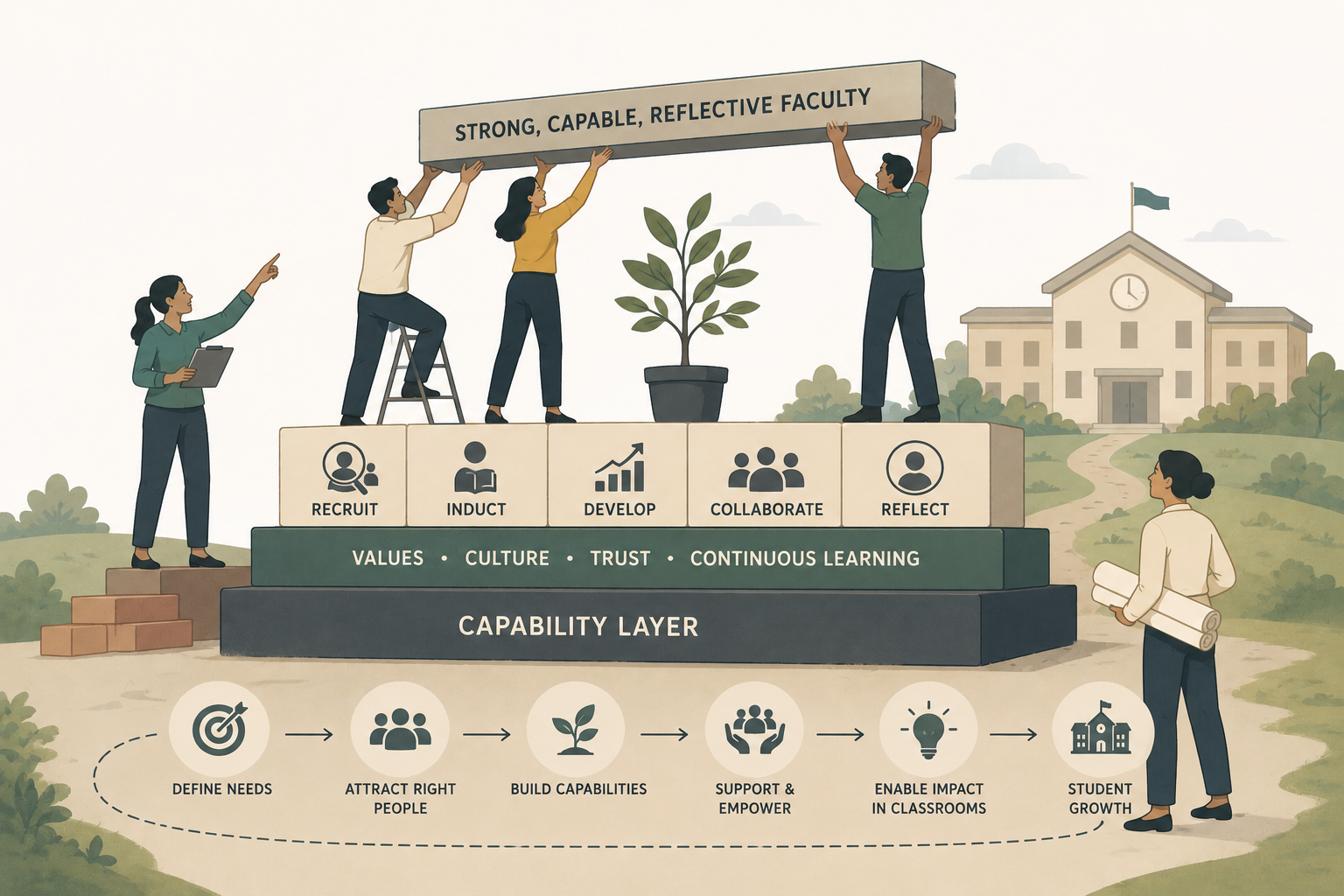
Building a school's faculty from the ground up

Building the capability layer that curriculum design and development needs before it can be implemented and delivered in classrooms.

Naming what AI actually does in a classroom

A framework built to distinguish AI’s roles in pedagogy: thinking partner, critic, teaching assistant, or secretary. Naming the role changes how students and faculty use it.

    ENGAGE

    Building something that should last?

    If you’re navigating change that matters, we’d like to explore it together.

    Careers

    Join our team.

    We’re a team of creatives who are excited about unique ideas and help fin-tech companies to create amazing identity by crafting top-notch UI/UX.